United States / 2004 / UNRESOLVED
Nimitz Tic Tac UFO encounter
The modern benchmark for military UAP cases. The Nimitz Tic Tac encounter is one of the strongest modern military UAP cases because it combines trained aviator testimony, shipboard radar claims, infrared video, and later official acknowledgement that the video records unidentified aerial phenomena.
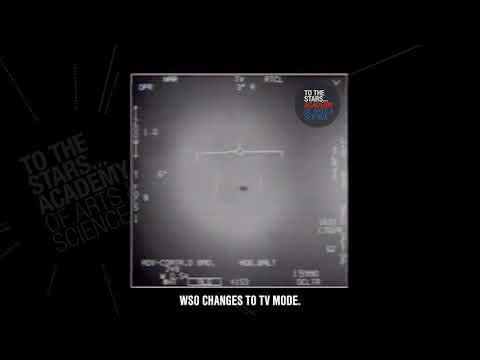
This case remains unresolved in the public record, with credibility grade A.
- Documentation
- High documentation
- Primary location
- Pacific Ocean off Southern California
- Source base
- 5 linked records
- Research use
- Comparison case
Case dossier
What happened: Nimitz Tic Tac UFO encounter is centered on Pacific Ocean off Southern California. The public case centers on November 2004 training operations involving the USS Nimitz carrier strike group and the USS Princeton. Radar operators reportedly tracked unusual targets before F/A-18 crews were vectored to investigate a white, wingless object moving above the ocean.
Why the setting matters: The case became a benchmark because it is not just a story about a strange object. It is a test case for how military witnesses, sensors, official disclosure, public uncertainty, and missing primary data interact. The public chronology, location, witness setting, technical context, and later interpretations should be read together rather than compressed into a yes-or-no mystery.
Witnesses, media, and evidence context: In November 2004, personnel attached to the USS Nimitz carrier strike group investigated anomalous targets tracked near the Southern California training range. Commander David Fravor and other aviators later described a white, wingless, oblong object that moved abruptly and showed no obvious propulsion. The case is centered on Pacific Ocean off Southern California, and the key evidentiary layer is described in the brief as follows: The strongest public evidence is the convergence of named military witnesses, aviation context, sensor claims, and the Navy video later released by the Department of Defense. The weakest part is that complete raw radar data, full mission records, and original sensor context are not publicly available. The main recorded leads include trained military witnesses, shipboard radar, airborne infrared video, later official acknowledgment. Read the witness or observation material for concrete details first: who reported the event, what was described, how the description entered the public record, and whether images, sensors, official files, or later reporting support the same core facts.
Evidence record: The main recorded leads include trained military witnesses, shipboard radar, airborne infrared video, later official acknowledgment. The most useful way to approach Nimitz Tic Tac UFO encounter is to ask what each piece of material can actually prove. A contemporary report can anchor the date; a photograph or film can show what the camera recorded; a radar or sensor claim can describe what an instrument may have tracked; a later investigation can show which explanations were considered.
Media, sensor, and document record: The strongest public evidence is the convergence of named military witnesses, aviation context, sensor claims, and the Navy video later released by the Department of Defense. The weakest part is that complete raw radar data, full mission records, and original sensor context are not publicly available. None of these layers should be treated as identical. Images, recordings, sensor claims, witness statements, official files, and later books or documentaries all answer different questions, and each can be strong in one respect while weak in another.
Official and institutional record: The U.S. government has acknowledged the Navy videos as genuine recordings, while broader UAP offices discuss the case as part of the modern military UAP record. No public explanation has fully closed every claim around the encounter. The dossier currently links 5 source(s), including: Wikipedia overview, U.S. Department of Defense, DocumentCloud, YouTube / public release coverage, YouTube / PBS NOVA. Institutional sources are used to fix dates, places, investigation scope, and public conclusions, but official attention does not by itself prove an extraordinary origin.
Possible explanations: Careful analysis still has to test range estimation, parallax, sensor interpretation, training-area clutter, and the difference between what was recorded and what witnesses later inferred. A cautious reading tests aircraft, balloons, drones, astronomical objects, military activity, sensor error, camera perspective, media amplification, and memory reconstruction before treating the case as anything stronger than the public record allows.
Nimitz Tic Tac UFO encounter remains unresolved in the public record, so the useful skeptical standard is evidence-specific: what would actually move the assessment? For a case tagged military, radar, video, that means looking for independent contemporaneous witnesses, original statements, and records that pin down distance, direction, duration, and lighting. Until those materials exist, the archive should preserve the claim, the best conventional explanations, and the limits of the record without making the mystery look more settled than it is.
Why this belongs in a UFO/UAP archive: Nimitz Tic Tac UFO encounter remains useful because it is repeatedly cited, compared, debated, and reinterpreted. The important question is not only whether the case proves something extraordinary. It is also how the report entered public record, which details are well documented, and which claims still require primary records, metadata, or independent testimony.
Related video
Timeline
- USS Princeton operators reportedly track unusual targets during training operations.
- F/A-18 crews are directed to investigate and report a white oblong object above the ocean.
- Reporting on Pentagon UFO programs and Navy videos brings the case into mainstream debate.
- The Department of Defense formally releases Navy UAP videos associated with the public debate.
Evidence matrix
Cataloged as a research lead. Weight depends on provenance, chain of custody, and independent corroboration.
Cataloged as a research lead. Weight depends on provenance, chain of custody, and independent corroboration.
Cataloged as a research lead. Weight depends on provenance, chain of custody, and independent corroboration.
Cataloged as a research lead. Weight depends on provenance, chain of custody, and independent corroboration.
Evidence assessment
The strongest public evidence is the convergence of named military witnesses, aviation context, sensor claims, and the Navy video later released by the Department of Defense. The weakest part is that complete raw radar data, full mission records, and original sensor context are not publicly available.
The main recorded leads include: trained military witnesses, shipboard radar, airborne infrared video, later official acknowledgment. Their weight depends on primary records, independent sourcing, technical context for sensors or images, and whether explanations cover the central facts.
Evidence is treated in layers: some material proves the event was reported and investigated; other material shows how the public narrative formed.
The strongest evidence usually has a traceable origin, a clear date and place, stable witness details, and technical context. The weakest evidence usually depends on cropped imagery, late retellings, missing chain of custody, or claims that grew after the case became famous.
What would change the assessment: better primary records, original image or film material, complete instrument logs, named contemporaneous witnesses, and a transparent explanation of provenance would all improve confidence. Missing originals, incompatible timelines, and claims that appear only in late secondary retellings lower confidence even when the story remains culturally important.
Official context
The U.S. government has acknowledged the Navy videos as genuine recordings, while broader UAP offices discuss the case as part of the modern military UAP record. No public explanation has fully closed every claim around the encounter.
The dossier currently links 5 source(s), including: Wikipedia overview, U.S. Department of Defense, DocumentCloud, YouTube / public release coverage, YouTube / PBS NOVA. Institutional sources are used to fix dates, places, investigation scope, and public conclusions.
Acknowledging a report or investigating an incident does not confirm extraordinary origin. A conventional explanation also has to cover the main facts.
Where official records are incomplete, the archive should show that incompleteness plainly instead of filling the gap with certainty.
Skeptical notes
Careful analysis still has to test range estimation, parallax, sensor interpretation, training-area clutter, and the difference between what was recorded and what witnesses later inferred.
For Nimitz Tic Tac UFO encounter, skeptical review should stay anchored to Pacific Ocean off Southern California in 2004, not to a generic checklist. The current file is built around trained military witnesses, shipboard radar, airborne infrared video, later official acknowledgment and 5 linked sources; ordinary explanations should be tested against those specific materials, viewing conditions, and dates before the case is treated as anything stronger than unresolved. Original media, metadata, camera position, exposure, edits, and independent copies matter more than screenshots or later reposts.
Nimitz Tic Tac UFO encounter remains unresolved in the public record, so the useful skeptical standard is evidence-specific: what would actually move the assessment? For a case tagged military, radar, video, that means looking for independent contemporaneous witnesses, original statements, and records that pin down distance, direction, duration, and lighting. Until those materials exist, the archive should preserve the claim, the best conventional explanations, and the limits of the record without making the mystery look more settled than it is.
Sources
- Reference databasePentagon UFO videosWikipedia overview
- Official fileAARO official resourcesU.S. Department of Defense
- ArchiveUSS Nimitz UAP Executive SummaryDocumentCloud
- News reportFLIR1 official UAP footageYouTube / public release coverage
- News reportThe Tic Tac UFO: can this sighting be explained?YouTube / PBS NOVA